

Fire ants (Solenopsis)
Content Updated: February 26th, 2025
Fire ants, belonging to the genus Solenopsis, are notorious for their aggressive behavior and painful stings. Also known as red imported fire ants (RIFA), these pests have become a prevalent issue across the United States, particularly in the southern region. Their ability to form large colonies can make these pests a considerable nuisance for homeowners – especially since their powerful stings can cause allergic reactions. Learn everything you need to know about fire ants and what to do if you find them in your home.
Fire ant identification
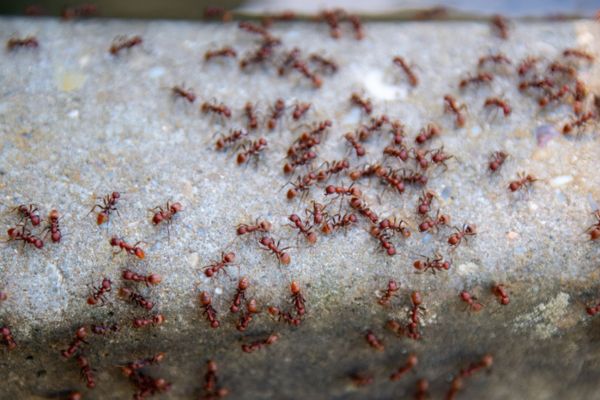
Fire ants have a distinctive shiny, reddish-brown coloration with a segmented body. There are many sizes of worker ants in the colony, but most typically range from about 1/8 to 3/8 of an inch long. They have two nodes on their petiole, which separates the thorax from the abdomen, and their stinger, which they use when threatened. There are several types of fire ants, but the most common species include the Red Imported Fire Ant, the Southern Fire Ant, and the Tropical Fire Ant.

Fire ants vs. red ants
Fire ants and red ants are easy to confuse, but they can be distinguished by several key characteristics. Fire ants are typically smaller and have a distinct stinger that is easily visible. In contrast, red ants are slightly larger in size and have a more robust build. Behaviorally, fire ants are notorious for their aggressive nature, especially when their nests are disturbed. Additionally, fire ants build noticeable mounds, while red ants may create nests in wood or soil without the prominent mound structure.
Behavior and habitat
Fire ants are typically found in the southern United States, having spread significantly since their introduction in the 1920s. Their range now includes most Gulf Coast states, extending into parts of eastern Texas, Tennessee, and North Carolina. As an invasive species, red imported fire ants have become a significant concern due to their aggressive nature and ability to disrupt local ecosystems.
They are opportunistic feeders, primarily eating proteins, sugars, and fats. Their diet includes insects, seeds, and foods left behind by humans, making residential areas particularly attractive. Fire ants construct large, visible mounds, which can contain a dozen or more nests within a single lawn. When disturbed, these ants will aggressively defend their colonies, often swarming and stinging intruders. Their colony structure is social, consisting of a queen, workers, and sometimes winged males during mating season.
Lifecycle and reproduction
The lifespan of a worker fire ant is typically about 30 days to several months, depending on environmental conditions and their role within the colony. In contrast, queens can live for several years. Reproduction in fire ants occurs through a process called nuptial flights, during which winged males and queens mate in midair. After mating, queens land, shed their wings, and seek suitable nesting sites to establish new colonies. Once a queen starts her colony, she can lay hundreds to thousands of eggs daily, depending on the species and environment. Fire ants reproduce continually throughout the warmer months, with peak egg-laying occurring in the spring and summer.
Signs of fire ants
Fire ants are attracted to our homes for many reasons. Here’s why you may find fire ants crawling around your home:
Food sources. They often seek food sources, particularly proteins, sugars, and oils. This means that pet food, spilled food items, and even garbage can draw them in.
Moisture. Fire ants are drawn to moisture, so areas around leaky pipes, pet water bowls, or other water sources can make your home more appealing.
Shelter. These pests can easily find their way indoors through tiny openings and cracks in the foundation, gaps around windows and doors, or even along utility lines. Once they gain entry, they can create nests in walls, under floors, or in other hidden areas.
If you suspect these pests have made their way inside your home, there are several signs to look for.
Mounds. Mounds can often be found in sunny areas of your yard. These mounds can vary in size and shape, typically appearing as small, loose hills of soil.
Swarming behavior. If you disturb their mound, fire ants will aggressively swarm and defend their territory.
Visual sightings. If you see small reddish-brown ants scurrying around, this can be a clear sign that you are dealing with an infestation.
Are fire ants dangerous?
Fire ants are considered dangerous due to their aggressive nature and painful stings. While they are generally not lethal to humans, fire ant bites can cause significant discomfort and allergic reactions in some individuals. This can be especially concerning for pets, as dogs and cats can experience severe reactions to fire ant stings.
When fire ants bite, they inject venom that creates a burning sensation, often followed by a red, swollen area that can become itchy or painful and may even develop into pus-filled blisters. Additionally, a person seldom receives just one sting. Rather, dozens or even hundreds of stings can be inflicted quickly on a person accidentally kneeling or standing next to or on a fire ant mound. Fire ants can also cause damage to homes and structures by building their nests in and around buildings, which can compromise foundations.
How to get rid of fire ants
Fire ants can pose a significant health threat, so it’s important to take action immediately to control these pests on your property. When disturbed, fire ants will swarm, making it challenging to treat the area without getting stung. If you must get near the site, wear protective clothing and use caution. For long-term prevention, keep your yard clean of food scraps and debris and seal entry points into your home. You may also use DIY methods such as over-the-counter fire ant baits; however, it’s important to note that these treatments may not be as effective as professional control.
If you’re dealing with fire ants — Terminix can help. Call today and let our experienced technicians help keep your home protected.