Carpenter ants (Camponotus)
Content Updated: February 12th, 2025
One of the most common—and destructive—ants in the United States is the carpenter ant (Campontus), with over 20 different species found throughout the country. Once they have infested your home, these ants can be challenging to eliminate and cause structural damage. The first step for how to get rid of carpenter ants is the ability to identify and understand them. Keep reading to learn more about these insects, their habits, and behaviors.
Carpenter ant identification
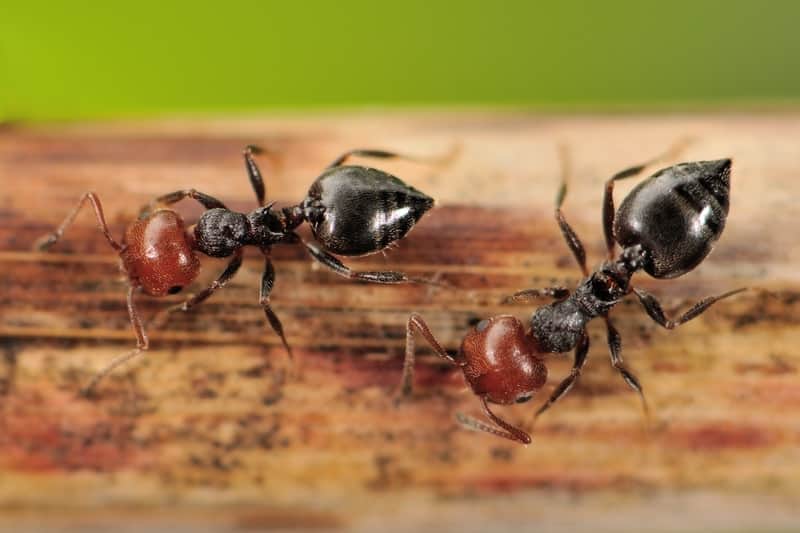
Carpenter ants are big, black ants with segmented bodies consisting of a head, thorax, and abdomen, with a single node connecting the thorax to the abdomen. They have elbowed antennae and range in size from 3/8 to 1/2 inch for workers, while queens can reach up to one inch.
Some carpenter ants develop wings, but not all. Only the sexually reproductives (queens and males) develop and grow wings when they are ready to swarm for their nuptial mating flights. Workers do not have wings. They are different from other black ants because they are larger, have a different body shape, and have elbowed antennae.

Carpenter ants vs. termites
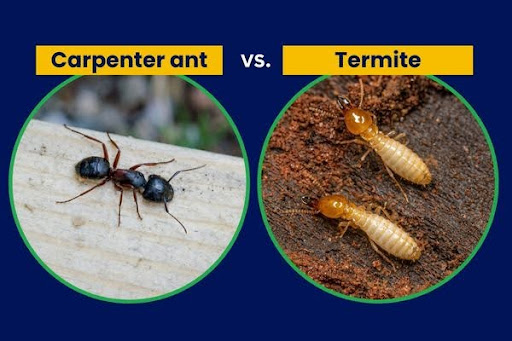
Carpenter ants are often mistaken for termites because both insects damage wood. However, one noticeable characteristic is their body shape: carpenter ants have a "pinched" waist, while termites do not. Termites are also generally lighter in color and possess straight antennae, whereas carpenter ants have bent, elbowed antennae. Termites consume wood as part of their diet, while carpenter ants do not eat wood; instead, they chew through it to create nesting chambers.
Carpenter ants vs. fire ants
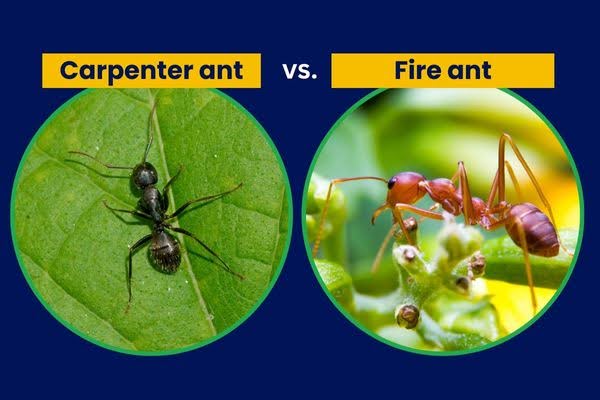
Carpenter and fire ants differ significantly. Carpenter ants are larger, black, or dark brown and nest in wood, leaving behind sawdust-like debris. Fire ants are smaller and reddish-brown and build mounds on the ground. They are also known for their aggressive behavior and painful stings.
Carpenter ant colonies
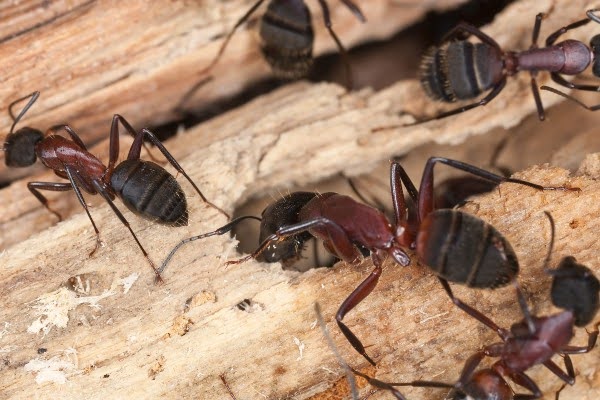
Carpenter ants colonies are typically hierarchical, consisting of different castes that work together to ensure the colony's survival. Their nests are often found in wood, where the workers create intricate tunnels and chambers. Carpenter ant satellite nests are smaller nests that branch off from the main nest. They are often found in drier wood or in buildings and contain worker ants, pupae, and mature larvae. The colonies can range from a few hundred to several thousand ants and may also have winged males that emerge during mating season.
Carpenter ant workers
The workers are divided into two categories: minor workers and major workers. Major workers often serve double duty as the colony's soldiers, while minor workers provide food and tend to the colony's young. The queen carpenter ant's first brood often becomes the colony's soldiers. Within the hierarchy, the ant workers vary from ⅜ to ½ of an inch long. Depending on their species, the workers come in different colors, from red to brown and black.
Carpenter ant queens
Carpenter ant queens look similar to the workers but are much larger—roughly one inch long—and have functional wings. Once the carpenter ant queen has mated, she loses her wings and uses her wings and stored fat to feed her offspring. It's pretty rare to see a queen, as she stays in a protected location.
Carpenter ant drones
The ant drones are larger than workers but smaller than queens. These types of carpenter ants have functional wings, which they use to meet a princess in midair and mate.
Behavior and habitat
These ants thrive in moist, wooded environments, making forests and areas with decaying wood ideal habitats. Carpenter ants are commonly found across the United States, with significant populations in the Pacific Northwest, Northeast, and Midwest regions. While not considered invasive, their presence in homes can be problematic due to their wood-damaging habits. Unlike termites, carpenter ants do not eat wood; instead, they chew through it to create nests, which can weaken structures over time. Their diet mainly consists of proteins and sugars, including honeydew from aphids, nectar, and other insects.
Life cycle and reproduction
During late spring or early summer, winged females and winged males mate. After mating, the male dies, and the female sheds her wings to lay eggs in a secluded spot. She remains there until the eggs hatch into legless larvae, which develop into adult workers after undergoing a pupal stage in a light tan or yellowish cocoon.
These worker ants will then start building a nest. Establishing a full-sized carpenter ant colony typically takes three to six years, which can range from 3,000 to over 50,000 ants. The life cycle from egg to adult takes about six to twelve weeks. Carpenter ant queens can live up to 20 years, while worker ants generally live around 12 months.
Signs of carpenter ant
If you suspect that you may have a carpenter ant infestation, keep an eye out for the following signs:
Noisy rustling sounds coming from walls or wood
Sawdust-like debris around wooden structures
The presence of winged ants, especially in spring and summer
Trails of ants leading to and from their nesting sites
Hollowed or damaged wood within your home
Ants spotted foraging for food, often at night
What attracts carpenter ants to your home?
Carpenter ants are primarily attracted to moist wood, making them a common problem in areas with high humidity or water damage. Leaky roofs, pipes, and improperly sealed windows can create ideal nesting sites. They also enter homes through cracks and crevices in the foundation, around windows and doors, and along utility lines. Once inside, they may be drawn to food sources like pet food, crumbs, and sugary substances.
Are carpenter ants dangerous?
Typically, carpenter ants are not harmful to pets or people, as they do not exhibit aggression or sting like fire ants. While they can bite if provoked, their bites are generally more of an annoyance than a serious threat. In terms of behavior, these ants are considered skittish and tend to avoid human interaction. The main concern with these pests is their ability to cause damage to homes and structures by excavating wood to create nests.
How to get rid of carpenter ants
Carpenter ants can be challenging to eliminate due to their ability to establish large colonies and their preference for nesting within hidden, moist wood structures. If you notice these pests in your home, immediate action is essential. Start by sealing off entry points, removing food sources, and cleaning up visible trails. Prevention tips include keeping your home dry, fixing leaks, and storing firewood away.
While DIY methods such as setting bait traps and using insecticidal sprays may provide temporary relief, they often fail to address the root of the problem. Professional ant control services are typically the best option for effective long-term solutions. At Terminix, our trained technicians utilize advanced techniques and tailored treatments to help ensure the complete elimination of carpenter ants, reducing the risk of future infestations. Carpenter ants are one of the 39 pests covered with our PestFree365+ plan.1
Get started with Terminix ant control services to keep your home protected from ants year-round!
1To see our covered pests, visit https://www.terminix.com/pest-control/pestfree365/.