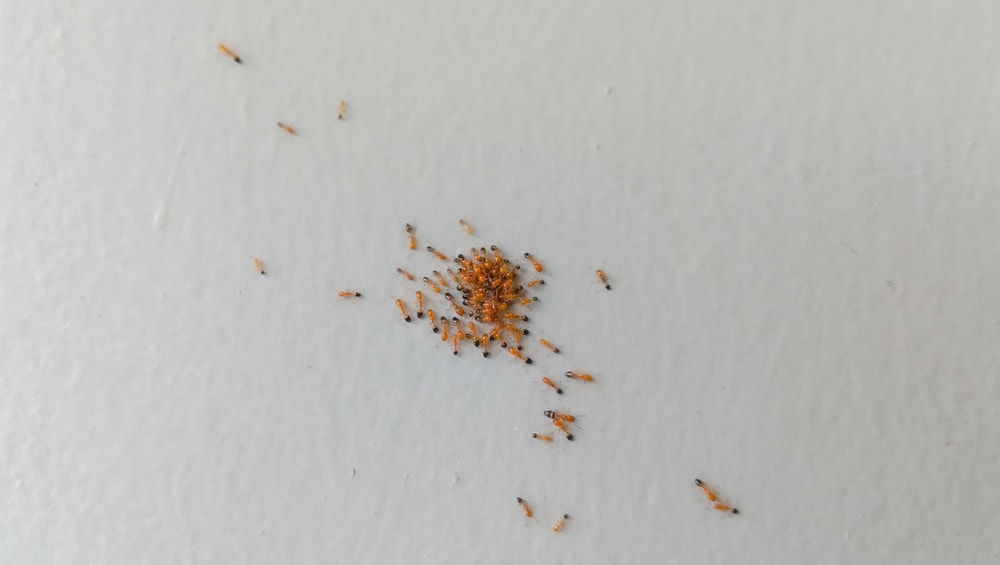
Acrobat ants (Crematogaster)
Content Updated: February 19th, 2025
Acrobat ants, scientifically known as Crematogaster spp., are often called "handstand ants" due to their unique defense posture. They have a distinctive way of defending themselves – they can curl their abdomens right up over their heads, almost like doing a handstand, which is how they got their name.
Acrobat ant identification
Acrobat ants are small insects, typically measuring around 1/8 of an inch in length. Their bodies are slender and smooth, giving them a somewhat shiny appearance. Their long, thin legs allow them to move quickly and efficiently through their environment. Only the male and female reproductive ants, known as swarmers, possess wings in the colony. These wings are crucial for their reproductive cycle, enabling swarmers to take flight and search for suitable locations to establish new colonies.

Acrobat vs. carpenter ants
Acrobat ants are significantly smaller, typically measuring 1/8 to 3/8 inches, while carpenter ants are larger, ranging from 1/4 to 1 inch. Acrobat ants have heart-shaped abdomens, while carpenter ants have more rounded abdomens. Behaviorally, carpenter ants are known for their wood-damaging activities, excavating tunnels within wood to create their nests. Acrobat ants, however, primarily nest in pre-existing cavities and do not typically cause significant structural damage.
Acrobat ant behavior and habitat
Like most ants, acrobat ants establish well-defined trails between the nest and food and water sources. They eat various foods, but the workers are partial to the sweet honeydew produced by aphids, scales, and mealybugs found feeding on many trees and plants. Fruit trees, roses, and many shrubs serve as hosts for aphids and may contribute to ant infestations in buildings. Most acrobat ant infestations inside are the result of workers searching for food.
Acrobat ants prefer to nest in moist or rotted wood, and colonies are most often found in tree holes, dead limbs, stumps, and logs. Rotting areas in fences, decks, and railings may also be nesting locations. Most acrobat ant infestations originate from outdoor nests; however, if moist or rotted wood exists inside because of water leaks, this ant will readily nest indoors. Such interior nests are typically found around the perimeter – in soffits, door frames, and skylights.
Life cycle and reproduction
Acrobat ants are known for their relatively long lifespans, with queens living up to 10 years or more, while worker ants typically last from a few months to a year. Their life cycle includes four stages—egg, larva, pupa, and adult—usually taking several weeks to complete under optimal conditions. Reproduction occurs during mating flights, where winged males and females leave the nest to mate, and after mating, queens establish new colonies. The timing of these flights varies by species and environmental factors, usually happening during specific seasons.
Signs of acrobat ants
If you suspect you have an acrobat ant infestation, look for the following signs:
Tiny black or brown ants trailing along surfaces
Visible nests in damp or rotted wood
Empty aphid shells or honeydew deposits on plants
Presence of winged ants during mating season
Ants entering through cracks or openings in your home
Accumulation of debris or frass near nesting sites
What attracts acrobat ants to your home?
Acrobat ants are often drawn into homes by food sources and moisture. These ants are particularly attracted to sweet substances, such as honeydew produced by aphids and sugary spills, which can be found in kitchens and dining areas. These ants typically enter homes through small cracks and openings around door frames, windows, and foundations. Once they find a suitable entry point, they will establish trails from their outdoor nests to the food sources inside, leading to potential acrobat ant infestations if not addressed promptly.

Are acrobat ants dangerous?
Although acrobat ants are not directly harmful, their presence can suggest wood damage because they prefer to nest in moist or decayed wood. While they do not typically cause significant structural damage like carpenter ants, persistent infestations can lead to problems if left unaddressed, mainly if they nest in areas of damp wood within homes. They are generally not harmful to pets or people, as they are not aggressive and do not bite or sting unless provoked.
How to get rid of acrobat ants
Acrobat ants can be challenging to eliminate once they've invaded your home, especially if they establish a nest in hidden areas. Immediate actions you can take include sealing any visible entry points, like cracks and crevices, and cleaning up food sources that may attract them, such as sugary spills. Preventing future acrobat ant infestations is equally essential—maintain a dry environment by fixing leaks, store food in airtight containers, and keep your kitchen and dining areas clean.
While DIY solutions like traps or repellents can offer temporary relief, they often fail to address the root of the problem. Professional pest control services are typically the best option for effectively eliminating acrobat ants. At Terminix, our team has the expertise and knowledge to locate and eradicate nests, prevent further infestations, and help protect your home. Get started today!