DIY
How ant traps work
Content updated: February 14th, 2025
Ants can be a significant nuisance for homeowners, invading kitchens, bathrooms, and even gardens. They can contaminate food, damage property, and cause allergic reactions. Ant traps offer a solution by attracting ants with a bait that they then carry back to their nest, spreading it among the colony and ultimately killing them. While DIY ant traps are readily available, professional ant control services may be necessary for severe infestations or difficult-to-reach areas.
How do ant traps work?
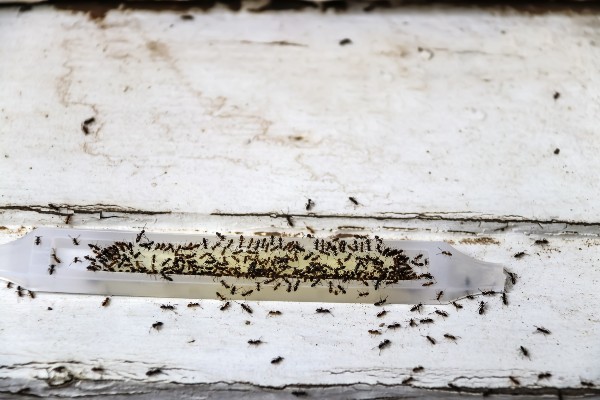
Ant traps lure ants with bait, usually a food source mixed with insecticide. Ants eat the bait and carry it back to their nest, sharing it with other ants and spreading the insecticide throughout the colony, killing them all. Ant baits often contain attractants like sugars, proteins, or fats and insecticides. Ant traps come in various forms, such as bait stations, gel baits, and granular baits.
How long do ant traps take to work?
Ant traps typically take a few days to weeks to eliminate an ant infestation effectively, but the exact timeframe can vary depending on several factors. The colony's size, the type of ant species, and the attractiveness and potency of the bait all play a role in how quickly the traps work. Larger colonies naturally take longer to eradicate, as the insecticide needs time to spread throughout the entire population. Warmer temperatures can help increase ant activity and feeding, potentially speeding up the process, while excessive humidity can dilute the bait, making it less effective.
Do ant bait traps work for all types of ants?
Ant baits can be an effective way to rid your home of ants. Unfortunately, this type of ant trap does not work for all ants — especially those attracted to a wide variety of food. Additionally, some ants, like little black ants, may be more attracted to fat-based baits, while carpenter ants may be drawn to sugar-based baits. A pest control professional can help identify the type of ants in your home, provide a comprehensive plan for ant control, and determine if additional concerns may be associated with the ant species.
Types of DIY ant traps
There are several types of ant traps, each functioning in unique ways to tackle ant infestations, including:
Liquid ant baits attract ants with a sugary solution mixed with insecticide. As the ants consume the liquid, they carry it back to their colony, spreading the poison. These baits are quite effective for eliminating entire colonies, but they can dry out or spill, diminishing their efficacy.
Homemade ant traps, often made with sugar, boric acid, borax, or vinegar, can also attract and kill ants. While they work well for more minor infestations, they may lack the potency of commercial options.
Glue traps use sticky boards to capture ants that walk across them, often containing attractants to lure the pests. While they can help to monitor ant activity and catch individuals, they generally do not eliminate entire colonies and can become unsightly if too many ants are trapped.
Pheromone traps utilize synthetic scents that mimic the trails ants follow, drawing them in to get caught. While helpful in monitoring ant presence, they don’t kill ants directly and typically require frequent replacements.
When using ant traps, it's essential to keep them out of the reach of pets and children. Some baits contain substances that can be harmful if ingested. Always read labels and follow guidelines to ensure safety.
How to use an ant trap
To effectively manage and eliminate an ant infestation, follow these steps when using an ant trap.
Identify ant trails: Observe and locate the paths or nests where you see the most ant activity.
Choose the right trap: Select an ant trap type suitable for the ant species you’re dealing with (liquid and bait, homemade ant trap, glue trap, etc.).
Place the trap strategically: Position the traps near the ant trails, nests, or areas where you've seen ants foraging.
Avoid disturbing the area: Do not clean or disturb the area around the trap, as this can deter ants from approaching it.
Monitor the trap: Check the traps regularly to assess their effectiveness and replace them as needed.
Follow safety guidelines: Keep the traps out of reach of pets and children, and read the labels for any specific handling or disposal instructions.
Ant traps vs. other ant removal options
Ant bait traps may take longer, but they can be more effective for minor ant problems than ant repellent or ant spray. Ant repellents keep ants away temporarily, but the ants usually return once the repellent wears off. Ant sprays kill ants on contact and continue to work in the sprayed area, but they won't stop more ants from returning. Unlike traps, sprays do not reach back to the colony, which is where the infestation usually starts.
When an ant problem is more extensive than seeing a few ants near food or along a baseboard, consulting a pest control professional is warranted. At Terminix, our ant control solutions are designed to help eliminate infestations and keep your space protected. View our available pest control services and schedule your first treatment today.